
What to Know About the Benefits From Himalayan Salt
Himalayan salt has become incredibly popular in recent years. You’ll see it in fancy grinders, pink salt lamps, spa treatments, and even detox drinks, often accompanied by bold claims about the claim of benefits from Himalayan salt.
Many people buy it believing it is cleaner, richer in minerals, or somehow healthier than regular table salt. But are those claims accurate? Or is Himalayan salt simply another trendy product that sounds healthier than it really is?
The truth is somewhere in the middle. While Himalayan salt does have unique features, it’s important to separate proven facts from assumptions. It still functions like salt, still contains sodium chloride as its main component, and still needs to be consumed in moderation.
What Exactly Is Himalayan Salt?
Himalayan salt is mined from ancient salt deposits in the region of Punjab, Pakistan. These deposits formed millions of years ago when ancient seas evaporated.
This type of salt is usually less processed than regular table salt, and that is a major reason why many people consider it “natural” or “clean” thus benefits from Himalayan salt are said better than regular ones.
Chemically, however, Himalayan salt is still salt, mainly sodium chloride, making up around 95–99% of its composition. Just like table salt, it influences electrolytes, fluid balance, nerve function, and muscle movement.
The pink color comes from trace minerals like magnesium, iron, calcium, and potassium. While these minerals contribute to its appearance, their amounts are extremely small.
You would need to consume unsafe amounts of salt to get meaningful nutrient intake from these minerals. This means the benefits of Himalayan salt are not necessarily from extra minerals, but from the same biological role that any salt performs.
Real Benefits from Himalayan Salt: What It Can Actually Do?
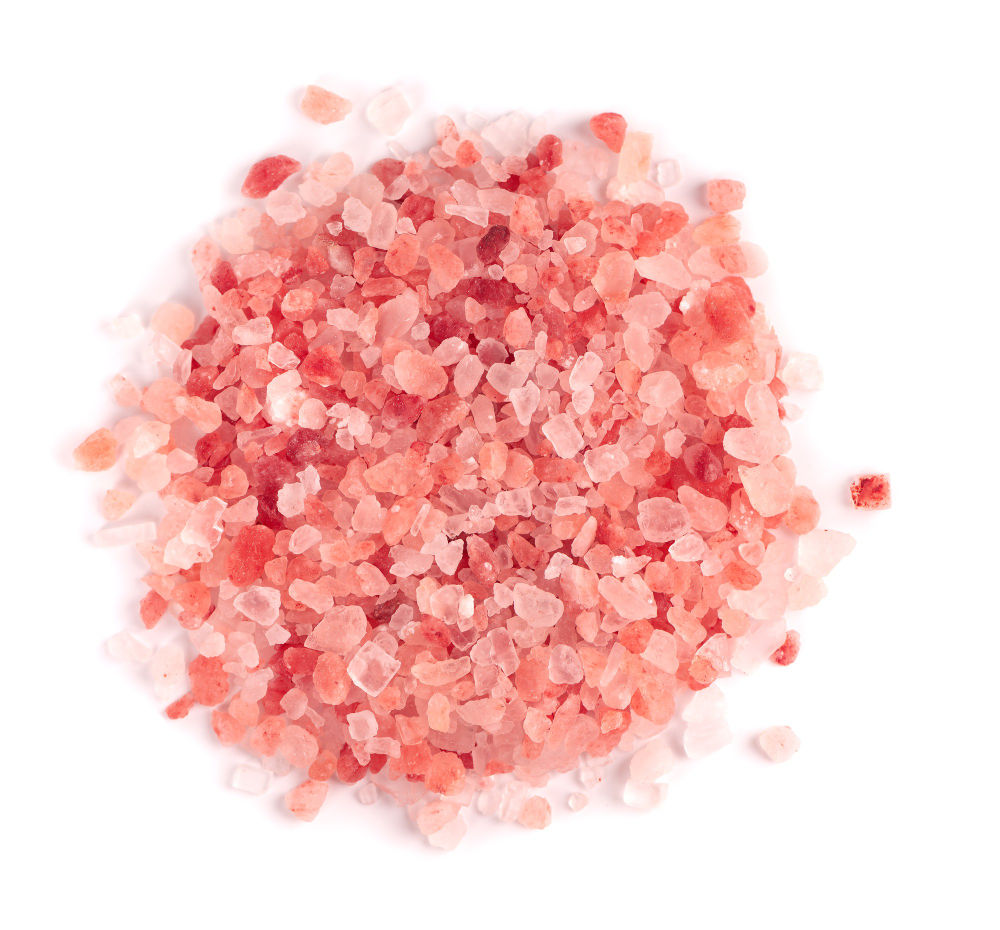
However, not all claims are false, as some benefits are genuine, simply because salt itself plays essential roles in the body, such as:
⦁ Supports Electrolytes and Fluid Balance
Your body needs sodium and chloride to maintain hydration and ensure that cells function correctly. Without enough sodium, you may experience fatigue, muscle cramps, or dizziness.
Himalayan salt provides this sodium just like any other salt. That doesn’t make it unique, but it does mean it has legitimate physiological value.
⦁ A Flavor Preference That May Reduce Sodium Intake
Some people use less Himalayan salt because its larger crystals taste saltier on the tongue. This can reduce overall sodium consumption unintentionally.
If coarse Himalayan salt helps you use less seasoning overall, this becomes a practical (not biochemical) benefit. It’s a behavioral advantage that indirectly supports healthier eating habits.
These effects are small but real, and they contribute to the reasonable benefits from Himalayan salt when used mindfully.
Potential Wellness Uses for Comfort
Himalayan salt is also used outside of cooking, especially in self-care routines, including:
⦁ Baths and Relaxation
Many enjoy soaking in warm water with pink salt. While this feels relaxing, and warm baths can soothe sore muscles, there is no strong evidence showing that Himalayan salt is better than regular salt for this purpose. So, the comfort comes from the bath itself, not uniquely from the salt.
⦁ Salt Lamps and Air Purification Claims
Salt lamps are often marketed as air purifiers or mood-enhancers. Scientifically, the effects are not proven. They may provide a warm, calming glow, which can improve ambiance and relaxation. It’s an emotional benefit rather than a chemical one. These uses can still be enjoyable, as long as expectations stay realistic.
Also read: Understanding the Benefits From Onions for Your Body
Clarifying the Myths: What Himalayan Salt Does Not Do
As Himalayan salt’s popularity grew, so did exaggerated claims. It’s important to understand what science does not support. Here’s some of them:
⦁ Not a Source of Significant Minerals
Even though it contains trace minerals, the amounts are tiny. To gain meaningful nutritional benefit, you would need to consume extremely high (and unsafe) levels of salt. These trace minerals are practically irrelevant in typical servings.
⦁ No Proven Detox Properties
“Sole water” or drinking Himalayan salt mixed with water is often advertised as detoxifying. This claim is unsupported. Detox happens naturally through your liver and kidneys, not salt water. In fact, consuming too much salt water may cause dehydration or electrolyte imbalance.
⦁ Does Not Improve Hydration Over Other Salts
Remember, hydration depends on balanced electrolytes, not the color or origin of the salt. Himalayan salt hydrates exactly the same way regular salt does. No better, no worse. No special benefits from Himalayan salt.
⦁ No Evidence That It Regulates pH or Improves Sleep
Claims that Himalayan salt balances pH or supports sleep are popular online but are not backed by reliable research. These are more myth than truth. Understanding these myths is key to evaluating the benefits realistically.
One important point is that Himalayan salt is still salt. Excessive salt intake, no matter the type, can increase the risk of high blood pressure, cardiovascular disease, and kidney strain. Sodium intake must be controlled regardless of which salt you choose.
In short, Himalayan salt is beautiful, useful, and enjoyable in both cooking and self-care, but the benefits from Himalayan salt are often overstated. It supports hydration and seasoning just like any salt, and while it contains trace minerals, their impact is minimal.