
Elements and Principles of Design for Better Visual Design
Every strong visual begins with a solid foundation. The elements and principles of design provide that structure, but without a clear understanding, it can be difficult to see how they work in practice.
This guide breaks them down with real examples of elements and principles of design to help designers apply them with confidence.
Key Takeaways:
- The elements of design, such as line, shape, color, texture, space, form, and value, are the building blocks that create structure and visual hierarchy.
- The principles of design, including balance, contrast, emphasis, movement, pattern, rhythm, and unity, guide how elements are arranged into cohesive visuals.
- Mastering both the elements and principles of design helps designers create clear, visually appealing, and professional work that communicates effectively.
The 7 Elements of Design
Think of the elements of design as the raw materials used to build any visual composition. They are the basic components designers combine to create structure, meaning, and visual interest.
1. Line

Lines are the most basic element that connects two points in space. They define boundaries, create shapes, and direct the viewer’s eye.
Example: In logo design, thick and bold lines suggest strength and reliability, while thin or wavy lines feel softer and more refined. On websites, lines also act as visual dividers that separate content and improve clarity.
Also Read: Y2K Graphic Design Explained: Retro-Futuristic Style Is Back!
2. Shape
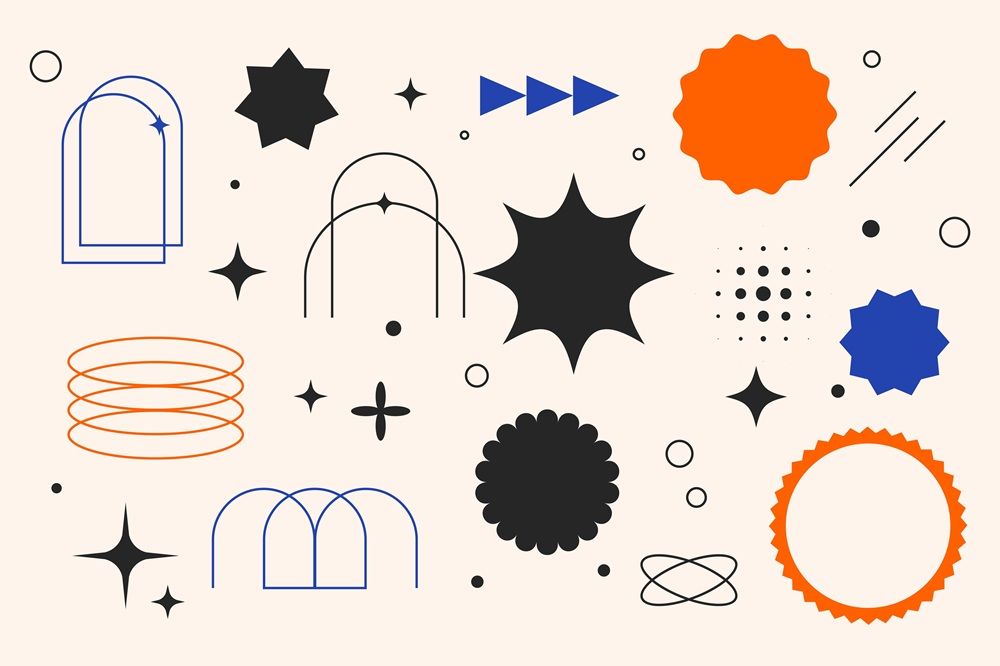
When a line closes in on itself, it forms a shape. Shapes are generally categorized as geometric, such as squares and circles, or organic, such as natural and free-flowing forms.
Example: Squares and other geometric shapes convey structure and reliability, which is why they are common in corporate branding, like banks. In contrast, organic shapes feel warmer and more expressive, making them a better fit for lifestyle brands and social media stickers.
3. Color

Color evokes emotion and draws attention. It has three main properties: hue (the color family), saturation (intensity), and value (lightness or darkness).
Example: A red “Buy Now” button on an e-commerce site shows urgency, while a blue background on a healthcare brochure instills a sense of calm and trust.
4. Texture
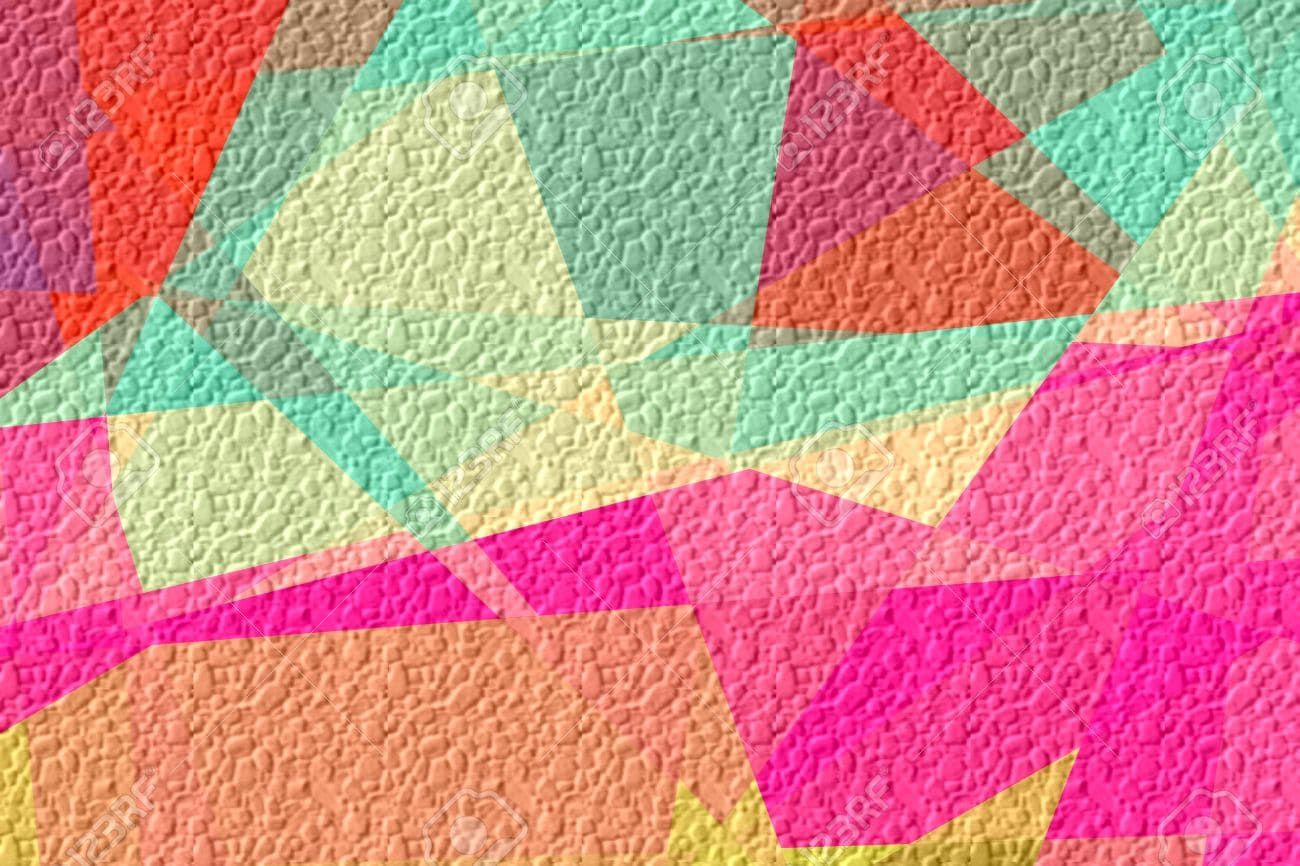
Among the many elements and principles of design, texture influences the surface quality of a design, creating how it appears to feel visually.
Example: Adding a paper grain texture to a digital poster creates a warm, handmade feel. In contrast, a smooth, glossy gradient gives a more modern and tech-focused appearance.
Also Read: Top 7 Graphic Design Best Software for 2026 for Designers
5. Space (White Space)
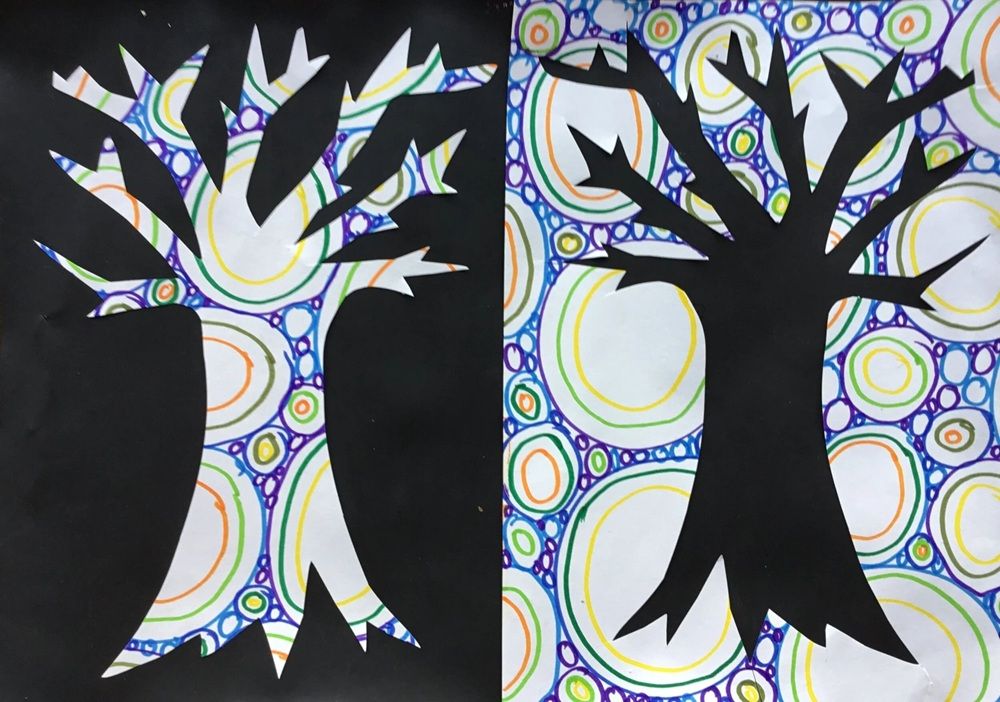
Space is the area around and between elements, and it is categorized into positive or negative space. Positive space is the subject, while negative (white) space is the background.
Example: Apple’s advertisements use generous white space to create a clean, focused, and premium visual feel.
6. Form
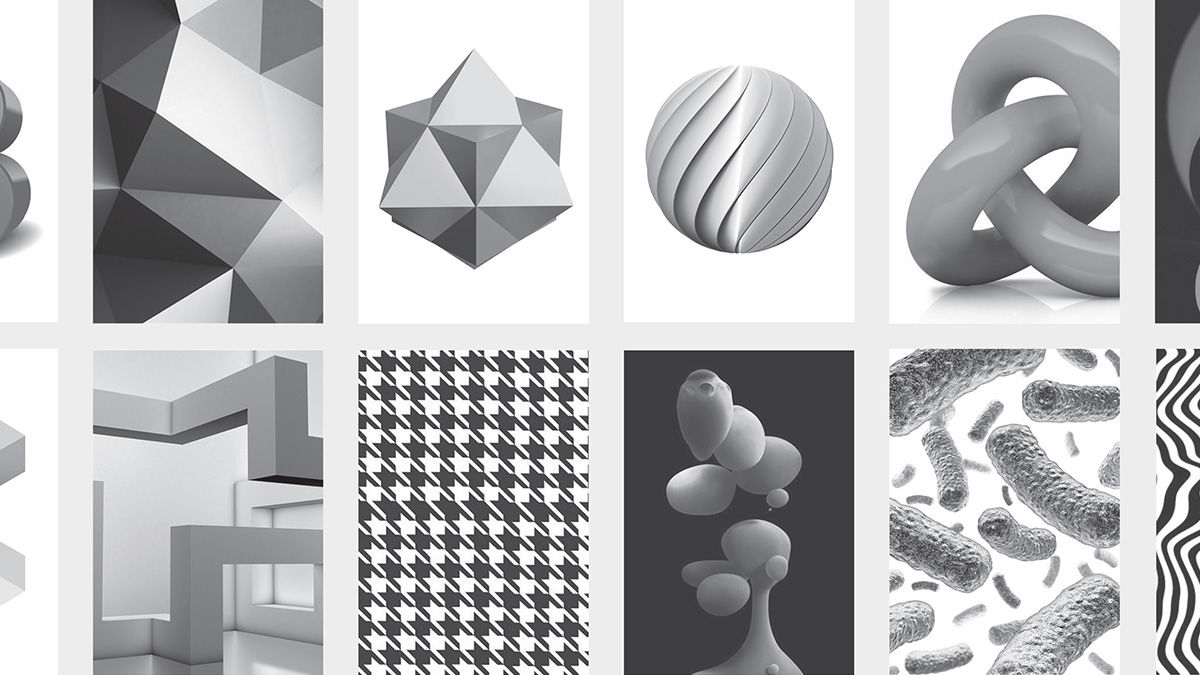
Form adds depth to shape by creating the illusion of three dimensions through light, shadow, and perspective. It helps designs feel more realistic or tactile.
Example: Flat design uses simple shapes and subtle shadows to indicate interactive elements like buttons. In contrast, 3D illustration relies on depth and volume to create characters or products that feel more lifelike and visually striking.
7. Value
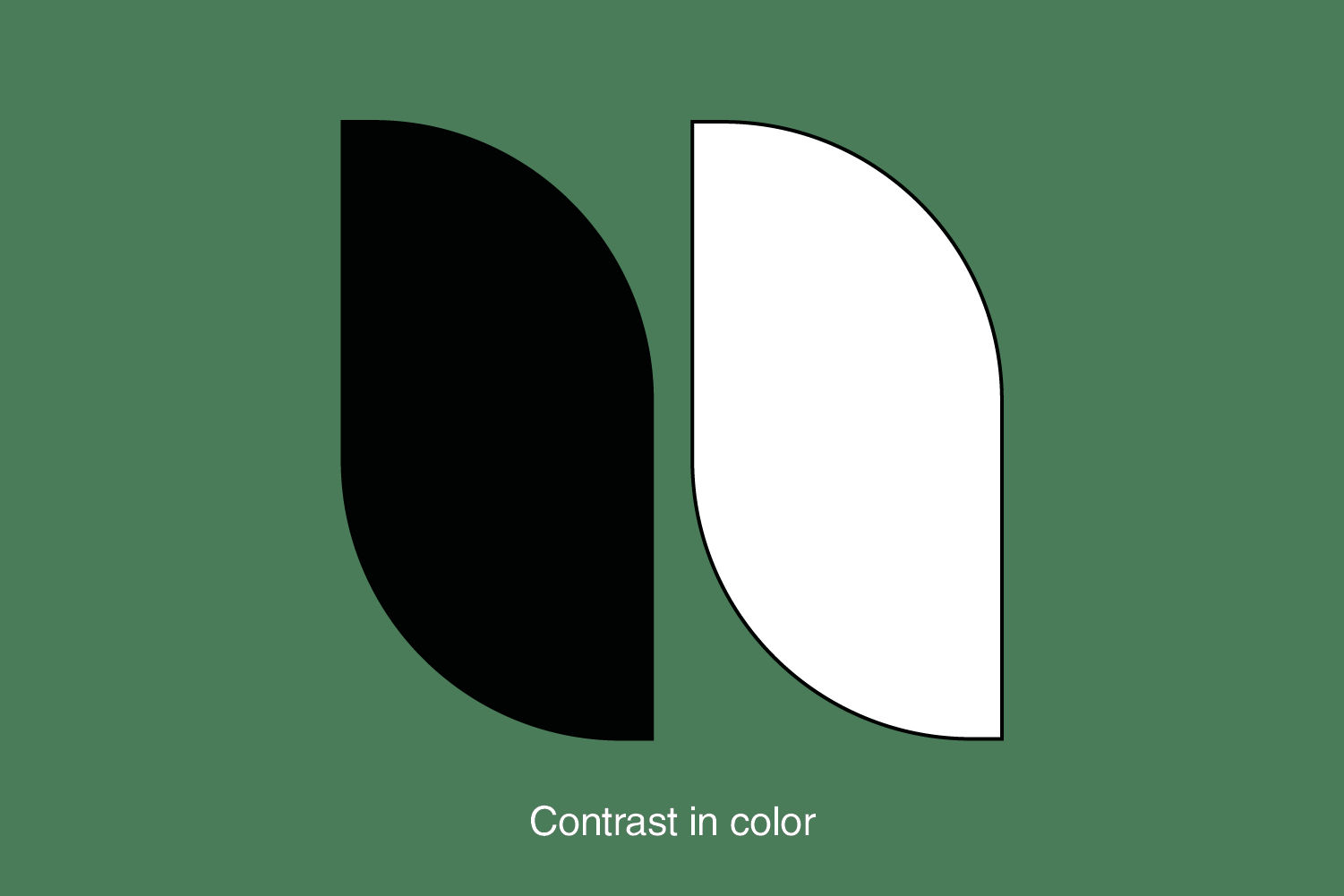
Value describes the lightness or darkness of a color and plays a key role in creating contrast, emphasis, and depth.
Example: High contrast, such as black text on a white background, keeps body text easy to read. Meanwhile, gradients with shifting tones add depth and lighting to icons, making them feel more dimensional.
Also Read: Top 10 Modern Typography Trends for Designers in 2025
The 7 Principles of Design
The importance of design principles comes from how they act as guidelines, helping designers combine elements in a clear, balanced, and intentional way.
1. Balance
Balance refers to the distribution of visual weight within a design. It can be symmetrical, where elements are mirrored on both sides, or asymmetrical, where different elements are balanced through size, color, or placement.
Example: An asymmetrical magazine cover feels modern and dynamic when a large image is balanced with smaller blocks of text.
2. Contrast
Contrast creates a visual difference between elements, helping organize content and draw attention. It can be achieved through changes in color, size, shape, or typography.
Example: In a hero banner, a bold headline paired with a smaller subheadline creates an immediate and clear visual hierarchy.
3. Emphasis (Hierarchy)
When learning the elements and principles of design, you’ll find that emphasis directs the viewer’s attention by highlighting the most important elements first. It establishes a focal point and supports a clear information hierarchy.
Example: On a movie poster, the title typically receives the strongest emphasis, followed by the lead actors’ images as secondary emphasis.
4. Movement
Movement guides the viewer’s eye through a design using visual cues such as lines, shapes, or directional elements.
Example: An arrow graphic pointing toward a contact form leads the viewer’s gaze and encourages the desired action.
5. Pattern
A pattern is the repetition of specific visual elements that builds brand recognition and visual consistency.
Example: A background composed of repeating geometric icons can reinforce a tech brand’s identity without distracting from the main content.
6. Rhythm
Rhythm creates a sense of organized movement through repeated elements with intentional variation, such as spacing, size, or placement. It helps guide the viewer smoothly through a layout.
Example: In a blog layout, consistent spacing between headers, images, and paragraphs creates a reading rhythm that makes long content easier to digest.
7. Unity (Harmony)
Unity refers to the sense that all design elements belong together and support a single, cohesive message. It is the outcome of applying all design principles effectively.
Example: Using a consistent color palette and font pairing across a brand’s website, business cards, and social media posts ensures that the brand feels professional and unified.
Also Read: 8 Recommended Packaging Design Software in 2025 for Everyone
Applying the Elements and Principles of Design in Practice
Understanding the fundamentals of design is essential, but knowing how to apply design principles and elements is what makes a design effective. When these fundamentals work together intentionally, they create visuals that communicate clearly, feel balanced, and leave a stronger impact.
To create more cohesive designs, typography plays an important supporting role. High-quality fonts from HansCo Studio can enhance visual consistency and strengthen design impact. With a wide range of styles available, these professional typefaces are designed to complement different creative directions with ease.