
Smart & Easy! Guide to Growing Dragon Fruit in Coastal Areas
Growing dragon fruit is not rocket science. As long as you understand the basic needs of how to grow it, this plant can thrive and bear sweet fruit all season long.
As a tropical cactus plant, dragon fruit thrives in heat, strong light, and good air circulation, all of which are easy to find in coastal areas. Therefore, there are some quick ways to grow dragon fruit in coastal areas that are often easier than you might think!
Climate & Sunlight: The Key to Growing Dragon Fruit
Growing dragon fruit, which is a tropical or subtropical plant, prefers to plant in warm and sunny weather. The ideal temperature is around 20–30°C (about 68–86°F). Make sure your plants get at least 6–8 hours of direct sunlight per day.
If you are in a coastal area with bright sunlight, it is ideal for making dragon fruit leaves and stems strong, as well as helping flowers and fruit grow to their good potential.
In addition, if the heat of sunlight is too extreme during the day, you can provide light shade during the hottest hours to prevent the leaves from getting sunburned.
Also read: How to Eat Dragon Fruit: Easy Steps to Prepare and Serve It
Soil & Drainage: Main Supply for Healthy Roots
Do practice growing dragon fruit in the soil that is always wet. The best type soil is loose, sandy, light loamy, and make sure the drainage is excellent. If the soil is too clayey or often flooded, the roots can rot.
If you are planting in pots, you can choose soil that has been mixed with sand or perlite so that water can drain quickly. You also can plant it directly in the ground of the coastal areas with slightly sandy soil that must be porous and water-permeable.
How to Plant: Cuttings Are More Recommended
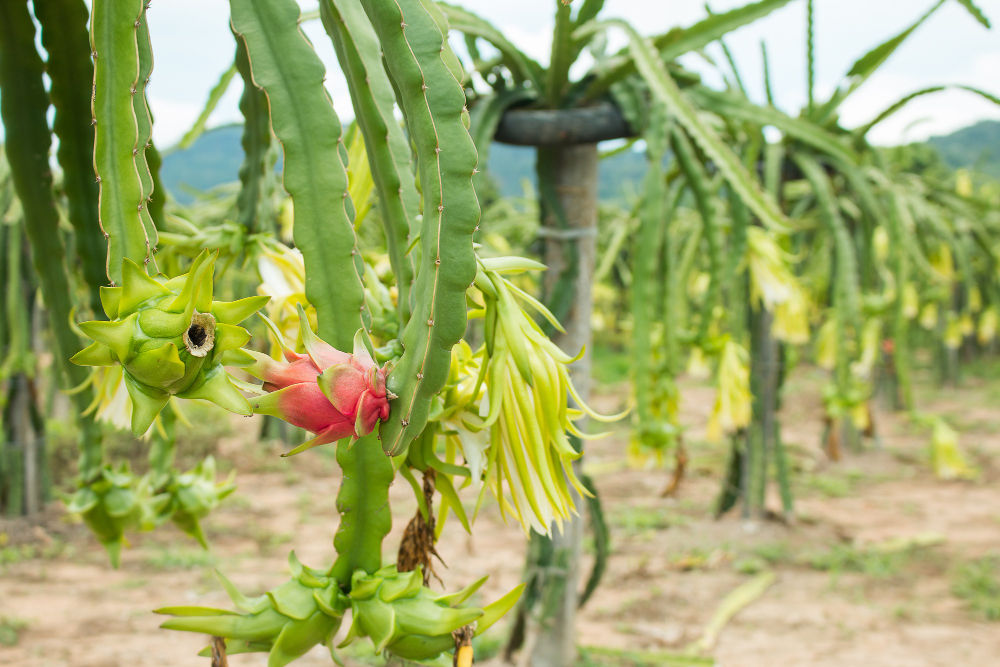
You can plant dragon fruit from seeds, but it takes a long time, up to 5–6 years to bear fruit. If you want faster results, use cuttings from a 30-40 cm healthy plant but if you live in a coastal area and the soil is suitable, you can plant it directly in the ground.
If you have a small plot of land, you can also use a large pot as long as it has drainage holes and you place it in a bright spot.
Watering, Supporting, and Pruning
Since dragon fruit is a climbing cactus, there are a few important things to keep it healthy:
- Water it deep but infrequently. Let the soil dry out a bit before watering again. After the top of the soil feels a bit dry, then water it.
- Make sure the plant has support, whether it is a trellis, pole, or fence, so the stems can climb upwards. Otherwise, the stems may fall over or grow unevenly.
- Prune old or overgrown stems to ensure good air circulation, even sunlight exposure, and optimal fruit growth.
Harvesting the Growing Dragon Fruit
If all conditions are met with sufficient sunlight, well-maintained water and soil, healthy plants, dragon fruit plants can start flowering and fruiting relatively quickly.
Fruits are usually ripe when their color has changed well, and the skin is slightly dry. Ripe fruit can be carefully picked from the stem using a knife or scissors.
If you are in a tropical coastal area where there is a combination of heat, sunlight, and good drainage, harvesting is likely to be faster than in colder regions or areas with constant rain.
Also read: Plan for Vegetable Garden: A Beginner’s Guide
The Reason Why Coastal Areas Good for Growing Dragon Fruit
Tropical coastal areas are actually ideal places for growing dragon fruit. The stable warm temperature along with the place of sunlight in these areas help the growing process run well to accelerate the plant growth.
The characteristic sandy soil of coastal areas is useful to water drain well which can prevent the roots from rotting.
In addition, the humid and warm air of tropical regions is able to support the basic needs of the dragon to grow lush and stronger.
To be noted, dragon fruit can actually plant and thrive almost anywhere, not just in coastal areas. The key remains the same: sufficient sunlight, loose soil with good drainage, light but regular watering, and sturdy supports to help it climb.
This flexibility makes dragon fruit suitable for planting in a variety of places, from home gardens and rooftop gardens to large pots on apartment terraces.
In conclusion, if you are interested in growing dragon fruit in any environment, just understand what this tropical cactus needs. As long as it receives heat, light, and a growing medium that doesn’t allow the roots to become waterlogged, this plant will grow steadily and productively.
Due to its heat-tolerant nature, ease of care, and quick adaptability, dragon fruit is ideal for both beginners and plant enthusiasts looking to add a tropical touch to their homes. With consistent care, you can enjoy robust growth and a continuous harvest throughout the year.